Showing posts with label mike dexter. Show all posts

Friday, November 16, 2012

Photo Hides Workshop Report

Words and images by Mike Dexter.

November on Mashatu is traditionally a green time of year. The first rains of the season would have fallen, blanketing the land with short grass and yellow flowers. Images of elephants in a green meadow-like landscape are iconic of this time of year. The scent of rain on dusty roads drifts on the breeze which brings with it the call of a distant Diderick Cuckoo.

November 2012 however, is anything but traditional as the clients on the recent photohides workshop were to find out. The rains are late, the ground is bare, and cracked baked earth lines the thirsty waterholes. Mashatu was revealing the colours of a raw, uncensored and unforgiving Africa. The animals have had a hard year and wait, in parched anticipation, for the clouds to burst and give them some respite.

The first thoughts after crossing the great sandy Limpopo (nothing green or greasy about it) at the Pont Drift border post are of what this harsh environment is going to offer to photograph. The question is slowly answered, piece by piece, as the open landcruiser makes its way along the dirt road to the Mashatu tented camp. At first it’s the contrast of the fresh green leaves on the mopane trees against the dark soil that catches the eye. Then you notice the clouds of dust kicked up by impala herds and the unobstructed views, from hoof to ear, of numerous giraffe as they feed on the Sheppard trees. An eland bull slowly climbs a distant hillside, his dark grey coat evident against the red rock.


On our first afternoon drive we were blessed with the sighting of what must be one of the most obliging leopards I have ever encountered. It was a young male, sleeping blissfully in the fork of an enormous Mashatu tree. We were the only vehicle at the sighting and, as the shadows were growing long, decided we’d stick around. As is so often the case in wildlife photography our patience paid off and he gave us an amazing show of yawning, stretching and a graceful elegant pose in perfect light. After half an hour of constant shutter firing he descended the tree and walked by a mere meter from the vehicle (I’m sure he knew something about minimum focus distance and was out to taunt us). We followed him as he stalked through through the riverine vegetation. The dry conditions working in our favour as the lack of undergrowth meant many opportunities for unobstructed shots. What a welcome!

That night we had an impressive thunderstorm and I couldn’t help thinking, as I lay in bed, about the young male out in the dark and rain and what he was doing now.


Another sighting which stands out amongst the rest was of 2 lionesses and 5 cubs. 2 of the cubs are 2 months old, the other 3 are slightly older. We came across them in what was clearly play time. The cubs were chasing, biting, pouncing and stalking; all skills which will need to be honed for success in later life but at this age they appear as no more than clumsy, hilarious antics. After a while the lionesses decided it was time to head for cover and they moved off down the river bed, the cubs reluctantly followed.

Other memorable encounters are of 6 cheetahs on the move and a special moment at a hyena den where a fearless and curious pup sniffed my hand.

This workshop was more than a photographic safari, it was an exploration of an arid land and the discovery of the inhabitants that call it home and have adapted to survive where many others would perish. It was also a journey and a lesson; that Africa has many faces, some prettier than others, but all of which are rich in drama and beauty and deserve to be photographed.


Read more...

Monday, May 28, 2012

Photo Hides at Mashatu

I have just spent the last 5 days at our photo hides up at Mashatu. My one main goal was to build another hide, which we did very successfully. So expect more unique and exciting images from our clients at the new hide soon. (Click on the images to enlarge)
The other reason for my visit was to get as much time and photography in the underground elephant hide as possible. This was a very easy feat as the animal action was continually impressive all and every morning. I was fascinated by the diversity of subjects to photograph. Every morning offered something different and each morning there was at least two or three photographic highlights.

I was very happy to be a wildlife photographer again and the low angle in the hides is so conducive to great images that each morning I was gunning to get going from camp to the hide! I even spent a night with Mike Dexter inside the hide, hoping to photograph the elephants in the moonlight. Unfortunately none came the night we overnighted, but as luck would have it, every other night (we had a camera trap set up). I think it must have been Mikes snoring... Here is a selection of some images from my 5 days in the hide. Enjoy. Shem Compion


Read more...

Monday, May 7, 2012

African Time - Mike Dexter

It’s 9:00 and we’ve been in the hide for an hour and a half. A herd of impala just moved off, as have the guinea fowl and go-away birds. Only a scattering of turtle doves remain, kicking up small clouds of dust as they shuffle down to the still water. It’s almost time to head back to camp for a hearty brunch when a movement catches the corner of my eye. I look right and there, only 2 meters away, is a pair of huge grey wrinkled feet. Then from the left another appears, a silent giant approaching the waterhole. The elephants are here.
Soon dozens more fill the world before us. All that exists at this moment is elephants, water, shutters and my heart drumming in my ears. We are part of the herd, looking up into thirsty mouths, almost touching the dripping trunks and cracked toe nails. Never in my life have I been as much absorbed and overwhelmed as I am at this moment. It’s difficult to think about framing, composition or exposure and I can barely hold the camera in my trembling hands. Even so, from this angle and from this close, a bad photograph is unlikely. It’s difficult to count but there are easily more than 60 elephants in this herd. After half an hour they start to move off, a slow procession throwing up clouds of dust as they make their way towards the distant feeding grounds across the river.
The next morning 08:35 comes by. We’ve been at the hide since just after 06:00 and have had some great birding. The typical deep grumble tells us that elephants are in the area and minutes later they appear from the mopane thickets in the East. It’s a breeding herd of 20 individuals, and they’re thirsty. Yesterday’s experience is repeated with equal intensity only now we are prepared. We’ve talked about how to maximise the photographic opportunity and what to concentrate on. We manage to control our shaking hands and start thinking about the photography. It’s difficult to do but back at the lodge the results speak for themselves as we review our photographs.
Over the next 2 days we were to have another 5 elephant encounters at the hide. What we noticed was the regularity at which the elephants were visiting the waterhole. Of the 7 elephant sightings 5 occurred between 08:30 and 09:00; whoever said ‘African time’ is unreliable clearly didn’t have the elephants of Mashatu in mind.
Ground level elephant sightings aside, we had some incredible game viewing on the latest C4 photo workshop including, but not limited to, wild dogs, aardwolf, tiny lion cubs and 6 different leopards.

Read more...
Monday, March 26, 2012

Changing perspectives at Mashatu

It was with great excitement that we trekked north on our annual pilgrimage to C4's first Mashatu workshop for the year. Meeting all our guests at the Alldays coffee shop on our way to the camp has become an institution for those participating. It was great to see all the excited faces, mostly friends who have done trips with us before, but also some new faces that would soon become part of the C4 family. We confirmed that the weather forecast looked great for the next few days as we headed for the border into Botswana and the start of our five-day Mashatu photo workshop.


Mashatu Tent Camp is a lovely small camp nestled in a forest that makes you feel closer to nature and would be our home for the five day trip. It offers all the necessities and luxuries for a photographic weekend with wonderfully friendly helpful staff. Mike Dexter met us at the border. He is C4's hide expert and is permanently stationed at Mashatu. As a well-respected guide and photographer in his own right he was going to be my fellow host for this weekend.


I was telling the guests all about Margaret's famous lemon meringue pie at Mashatu Tent Camp that is considered to be the best in the world. With great disappointment we learned that it would only be served during Sunday high tea, which we would miss. We persuaded the kitchen staff to switch Saturday and Sunday menu's around to experience this decadent delight and in the end I was happy that everyone agreed... the best lemon meringue pie in the world!


After settling into our new home we got together for high tea and set off on our first drive. A call came about a cheetah with five cubs. Seeing a cheetah with such a big litter of cubs is quite rare. We've had a cheetah with six cubs in the Masai Mara in Kenya before, and I've heard of someone seeing a cheetah with seven cubs once, but this is extraordinary for Mashatu and we raced to the sighting with great anticipation. We were not disappointed and found them all in great late afternoon light. Shutters were clicking furiously and it was a fantastic way to start the workshop.


The next morning we stumbled upon two lionesses on a fresh zebra kill not far from camp. Everyone was enjoying the early morning photography. While sitting at the lion kill, at one stage I turned around facing the back of the vehicle to help a guest with camera settings. Suddenly, in a moment of disbelief I saw a wild dog out of the corner of my eye. I immediately stopped talking out of pure shock! A pack of wild dogs were trotting on the road where we came from and also stumbled onto the lions. The one lioness immediately got that expression of intense focus on her face, stood up and started chasing the wild dogs. They all moved at an incredible speed. Luckily the lioness did not have any other intentions except for chasing the dogs away from their kill and thus gave up the chase quickly. We followed the wild dogs over very rough terrain and were amazed at the speed and stamina they had trying to move out of the lions' reach.


The afternoon was spent photographing general game and a big herd of breeding elephants in the last light of day. Some of the baby elephants were very entertaining and one young brave baby came to smell our vehicle, but he shook his head in disgust as his trunk touched the metal bar on the side of the vehicle. We had planned to do star trials that night but our plan was interrupted by the sighting of a leopard cub and his mother playing and drinking water on our way back to camp. The guests were not much disappointed for missing the star trail that evening and luckily the forecast was for clear skies for the next evening as well.


When I arrived at Mashatu, Mike had been telling me about the great sightings at the elephant hide and showing me some of the pictures he's taken from within the hide. I was bursting with excitement to go to the hide. We organized with him to go to the hide during the next two morning game drives. The elephant hide was recently completed by C4 in the middle of the reserve at a place called 'Moddergat', close to the Mujali river. The hide is sunk into the ground next to a waterhole with two small openings, giving you an eye level view of the waterhole. The perspective is amazing. To see the animals from that angle creates a whole new dimension to wildlife photography. It looks spectacular - even the usually dull-looking turtle doves and grey go-away birds looks great from this new perspective when they come down to drink.


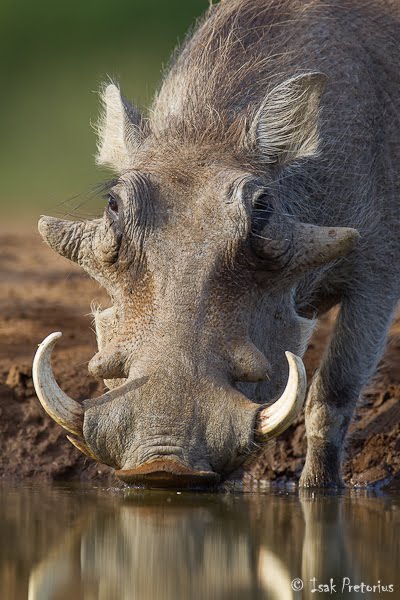
Both sessions we had in the hide were fantastic. Shutters were firing away furiously as we were entertained by all kinds of birds coming to drink, impala, warthog, elephants and even a leopard tortoise that we saw approaching from a distance. When a 25 strong breeding herd of elephants arrived it was breathtaking. They surrounded the waterhole and it felt as if you became part of the herd. Looking up at these majestic creates from ground level, standing meters away from you, was a surreal but humbling experience - one of my ultimate bush experiences ever. The photographic experience was overwhelming and when the herd left we were all shaking from adrenaline and excitement. I can now envisage all the potential photographs from this hide and wish I could stay there forever to capture all those shots. C4 has definitely hit a home run with this hide and the other three that are near completion.


The rest of the drives on our workshop seemed average in comparison to what we experienced at the hide but they were spectacular in their own right. Lots of leopards, including the three cubs that we had seen during our August workshop seven months ago and that are amazingly all still alive, two young male lions, breeding herds of elephants and all of the general game.


The format of our workshop weekend includes morning and evening game drives, tuition and advice on the vehicles, and photography instruction in the day between game drives. Definitely hard work that everyone is very keen for and just can't get enough of! Since all our guests are experienced photographers, most of whom have travelled with us before, our curriculum for the weekend included flash photography for wildlife, a demonstration and discussion on Lightroom and the changes in the new version 4, and image reviews. I was blown away by the quality of the images from our guests, once again confirming what a magical place Mashatu is and the quality and diversity it offers the wildlife photographer. Thanks Jake, Justice, Commando, Ona, Congo and the staff at Mashatu tent amp for an unforgettable experience.

Join one of C4's next Mashatu Workshops:
27 April - 1 May
14-18 June
22-26 November


Read more...