Showing posts with label photographic safari. Show all posts

Tuesday, December 9, 2014

C4 Valley Hide

It’s been an impressive start to the establishment of our newest hide edition on Mashatu Game Reserve, The Valley Hide.  The hide has been created using the same design principles as the existing Matabole Hide, which has served many photographers in capturing the renowned low angle intimate shots the hide is known for.
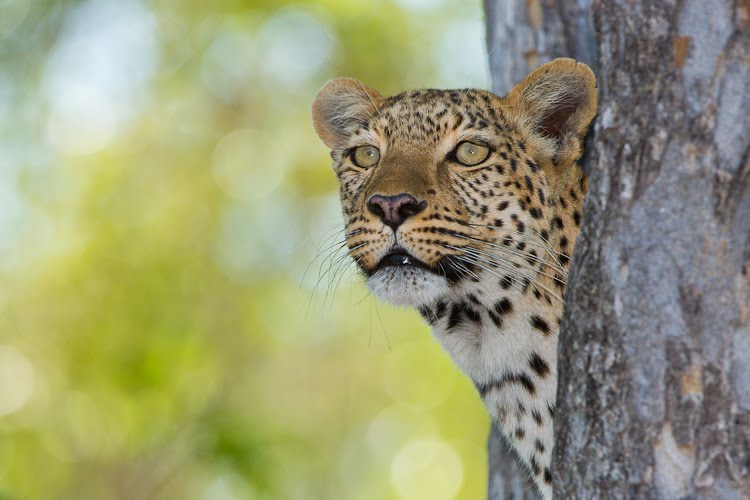
The Valley Hide is no different, and in its first few weeks of operation has proved to be a very active little waterhole drawing a variety of species to the hide. The visitors include; multiple visits from the valley’s resident leopard, giraffe, zebra, jackal, hyena, steenbok, impala, eland, warthog and of course a variety of bird species.
We look forward to witnessing the Valley Hides first full year in the bush, and capturing and sharing the cycle of visitors the waterhole attracts to it.


Drinking giraffe close up


Read more...

Monday, November 15, 2010

Experience Wilderness - By Isak Pretorius

Chiefs Island in the heart of the Okavango Delta is pure wilderness and a land of incredible beauty. Vast open seasonal floodplains with palm tree islands. Herds of animals roaming free and wild exactly like they have for thousands of years. Unspoiled scenic beauty that stretches as far as the eye can see. To experience this and to have it all to yourself to enjoy is pure magic! The recent C4 photographic workshop to Chiefs Camp offered our guests exactly that. This is my favorite destination in Africa.

chiefs island, okavango delta, isak pretorius, photographic workshop, photographic safari,

chiefs island, okavango delta, isak pretorius, photographic workshop, photographic safari,

Our photographic workshop was a great success, especially because we're such like-minded people, having a lot of laughs together, and enjoying the good photography and nature experience that this wilderness had to offer. Game viewing was fantastic with great sightings of the general Delta game, the big five, and a rare glimpse of a leopard carrying a week old cub. This leopard is close to camp and very accommodating towards photographers, a beautiful poser. We are looking forward to seeing her more during the upcoming safaris to Chiefs Island. Although we didn't do serious birding, we unofficially tallied more than 130 species for the trip. This included numerous lifers for most of the guests.

chiefs island, okavango delta, isak pretorius, photographic workshop, photographic safari,

Chiefs Camp is tucked between beautiful big Jackalberry, Sausage and Apple-leaf trees on the edge of the actual island, overlooking a seasonal floodplain. The camp has recently been renovated and the accommodation, food and comfort that the camp offers are exceptional. It's easy to see why this camp has been voted the best lodge in Botswana for three years in a row now!

chiefs island, okavango delta, isak pretorius, photographic workshop, photographic safari,

As a photographic safari our objective was to get top wildlife photos as much as it was to experience this untamed wilderness. Chiefs Island delivered superbly in both categories. Apart from the good photography, we also extended our experience into the air with a flip in a helicopter over the Delta, and an afternoon's mokoro experience on one of the main channels in the Delta.

chiefs island, okavango delta, isak pretorius, photographic workshop, photographic safari,

Thanks to all our guests, my co-host Albie Venter, our drivers Ishmael and Sky, and all the staff at the camp who made this such a memorable experience for all of us!

chiefs island, okavango delta, isak pretorius, photographic workshop, photographic safari,

Albie Venter's Report
Mark Dumbleton's Report
Chiefs Island 2011


Read more...

Tuesday, January 12, 2010

C4 Delta Safari, December 2009

Words and Images by Greg du Toit.

Just prior to the Christmas holidays I had the pleasure of co-guiding a photographic safari with my good friend and colleague Shem Compion. The group we had the pleasure of leading were all from the UK and all experienced travelers and photographers. Landing in Maun, we had some time to kill and Maun, not exactly a buzzing metropolis, meant that we walked across the road to a small pilots cafĂ© for a soda. While sitting whiling the time away, the group suddenly became excited and most notably Eric and Lesley! I swung around to see what was causing the excitement and sitting upon a lamppost were to rather common Pied Crows? I immediately realized that my traveling companions were not the usual shutterbugs interested in only hunting down the ‘big and hairies’. No, this group comprised keen naturalists and birders using photography as a tool to document and record all of nature’s splendours! This excited me a great deal as the wet season in the African bush simply heaves with life! Most photographic safaris run during the winter time when the big game concentrates around the last remaining water pools and although this is a good time for the predators and mammals, my favourite time in the bush remains the summer time when life abounds in all its forms!

greg du toit, photographic safari, safari, shem compion, delta safari

Looking back, the 12 day safari certainly was a celebration of life and this indeed in all its forms! The first camp that had the pleasure of hosting us was Kwara in the northern reaches of the delta! Who can forget the cicadas singing so loudly that their friends in the south of France would have been able to hear them? There were so many special and unique moments on the safari that it is impossible to share them all? For me, the highlight of Kwara was certainly not the beef but rather following a pack of Wild Dog through the bush! It was such a privilege to follow a truly wild pack of hunting dogs as they simply went about their frantic high-paced daily routine. The dogs would turn to and fro unperturbed by the thickets of Kalahari Appleleaf trees! How our drivers managed to not get lost I really do not know? Our poor safari guests had to duck and dive to avoid random branches striking them in the face or perhaps even knocking them clean off the vehicle! At one point I became concerned and glanced back only to see John merrily performing some in-camera editing while branches tore all about him? He seemed not the least bit concerned about his health and in hindsight the tangible energy and excitement of the dogs rubbed off on us all. Other highlights from Kwara were spotting a rare Serval and enjoying two of the most splendid sunsets imaginable!

greg du toit, photographic safari, safari, shem compion, delta safari

greg du toit, photographic safari, safari, shem compion, delta safari

After three pleasant nights in Kwara we enjoyed some duty free shopping at Kwara International before taking a lengthy 10 minute flight to Camp O! This camp is water based and all our activities were on boats of sorts! The first afternoon saw us whizzing along narrow channels that bisected waterborne Papyrus forests. Without the slightest forewarning, we happened upon a large hippo pool and spent the next hour photographing! Well that is too say, all, except poor Pauline who suffers from Hippophobia! We were unaware of her chronic condition and tried our best to avoid hippo for the rest of the safari which included removing the hippo-shaped butter dishes from the breakfast table! Although the birdlife at Camp O was disappointing, our bird list was indeed creeping up as the camp gardens graciously offered us sightings of Kurrichane Thrush. A highlight at Camp O was no doubt the Mokoro Canoe trip, which gave us opportunity to get close and personal with the tiny yet gorgeous Painted Reed frogs.

greg du toit, photographic safari, safari, shem compion, delta safari

greg du toit, photographic safari, safari, shem compion, delta safari

From Camp O, our next stop was Lebala, North of the Delta and in the Linyanti region. This was a most beautiful tract of pure wilderness with two distinguishable highlights:

greg du toit, photographic safari, safari, shem compion, delta safari

greg du toit, photographic safari, safari, shem compion, delta safari


The first being the spotting and subsequent photographing of a beautiful leopard amid lush grass and termite mounds! To see Africa’s most striking predator amidst the superb green foliage of the summer bush will remain a highlight for some time to come! Another very special sighting saw us enjoying our morning tea on the banks of a small lake. An elephant herd appeared out the bush on the opposite side of the lake and proceeded down to the water’s edge. Gazing back to the brush line, we were surprised to see another herd making its way down to the water and then another and another and another. The elephants just kept coming until an entire clan lined the lake fringe leaving some of us spellbound and the rest of us frustrated at not being able to capture the immensity of the sighting on camera? Even Brian, who is no stranger to photographing immense Antarctic panoramics, seemed overwhelmed?!

greg du toit, photographic safari, safari, shem compion, delta safari

Our last stop of the trip was at Lagoon Camp and although the weather stopped playing ball, we still managed to end on a high note with wild dog sightings almost everyday as well as a superb cheetah sighting. As I mentioned at the beginning however, our group was not just about the big five and we enjoyed getting down low and personal with velvet mites and fungi! A very special sighting at Lagoon was finding a Whalberg’s Eagle on a fresh Yellowbilled Hornbill kill!

greg du toit, photographic safari, safari, shem compion, delta safari

The food throughout the safari was exquisite but perhaps none more so than at Lagoon Camp where they provided additional protein in the form of flying ants (termites actually)! Who can forget my bush-whacking colleague (Shem), walking up to the lantern aloft the dinning table, grabbing a flying ant and gulping it down with a look of glee upon his face?

greg du toit, photographic safari, safari, shem compion, delta safari


When all is said and done, the safari was a sublime experience that offered up not only many memorable sightings of wild dog, cheetah and elephant but also many unique, smaller and more peculiar sightings (see photos attached). My only regret to the entire safari was promising Eric and Lesley 200 bird species, only to land in Jo’burg on 198 species! Glancing up at the airport terminal I was hoping to see a Rock Pigeon and a Little Swift but alas my time was up!

greg du toit, photographic safari, safari, shem compion, delta safari

Thank you ever so much to my traveling companions Eric, Lesley, Brian, Fiona, John, Harry, Pauline, Maggie and Peter. It was a pleasure hosting you and I hope to do so again in the future!

greg du toit, photographic safari, safari, shem compion, delta safari

Read more...

Wednesday, May 6, 2009

Leopard and Porcupine Interaction Video

Wildlife sightings are what make a good photo workshop. This is the one reason why we use Mashatu as a venue for our workshops. It is a 32000ha wilderness that holds some excellent wildlife viewing in an open landscape- making photography that much easier, and the ultimate results better.

This proved the case over the last workshop held on the 30 April – 4 May.


A dead Leadwood tree lying in the Mojale River was the focus off attention in the late afternoon sunlight. For on top of it, perched in the most regal of poses, sat a young 2-year old leopard. This young male is as good looking as leopards come and as relaxed as you will find anywhere.
We were busy photographing this perfect set up, when behind us I noticed a porcupine walking in the riverbed. It too, caught the leopard’s attention…
I won’t say much more, because the video below, taken by one of our clients, Guy Larin, shows some incredible interaction between the leopard and the Porcupine. This video was taken with a Canon 5DmarkII attached to a 100-400mm lens and shows the excellent quality of theses new video features that are on the more recent cameras. So do have a look!

How did it end? Both went happily on their own way, just as we did, although I believe we were more excited than the animals.
It again proves the value of the photo workshops- using a dedicated photographic safari company like C4 Images and Safaris’; you get to the best venues with the best photographers to make the best images.


Read more...

Tuesday, April 14, 2009

Safari Season

Most companies have seasons- even those that are business or corporate related. In some parts of the year they do better than in other parts of the year. The safari season is a divers thing; especially considering where you operate.
C4 Images and Safaris started out in Southern Africa, which has a defined safari season, but now, as we have expanded into Africa and beyond, the seasons have merged and the whole year is becoming safari time! That’s fine with us, because there is nothing more we enjoy than being” out there”.

nature safari, photo safaris, photo workshops, photographic safari

In years previous, our season was mainly form March through to November, with the quiet months over the Christmas/new year’s period. Now though, with demands for photographic safaris in different parts of Africa and our expansion into full time operation in east Africa, the whole year has become one season. It’s a sure sign that photo safaris are becoming more and more popular as a travel alternative, especially as another option to the normal nature safari.

So we began 2009 with our first photo workshop in March and from there we have already been busy with photo trips to other parts of Africa. We would normally be finished with the season in December, but this year we are pushing through, and will be taking trips in January, February and March in 2010! Nothing can be more pleasurable for us, and I’m sure that you will also enjoy the new variety of photo tours that we are leading through these times. Its not about running more tours, to us its about making more opportunities for great photos in excellent locations. That is what we are all about. Watch this space for more information on our new photo safaris and photo workshops.

nature safari, photo safaris, photo workshops, photographic safari

Read more...

Sunday, January 18, 2009

A Cold Season is Upon Us

The first of the cold fronts have swept across southern Africa, prompting me to once again, write about light- and of course how it affects a Photographic Safari.

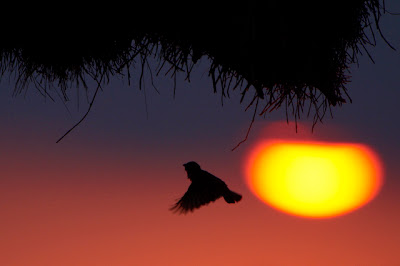
As the dry season approaches, all the vegetation loses its green colour and browns become a predominant part of the landscape. However, this does not affect the light- or the quality thereof. The quality of the light is caused by atmospheric dust.
As the landscape dries off, so more dust is kicked up into the atmosphere. This dust lies close to the earths surface and the important part: it filters out the green and blue wave lengths (shorter wavelengths) and only red comes through, leaving us with the classic soft and warm colours of the dry season.
Now we know why cities with serious pollution issues have the beautifully red sunsets: all the pollution filters out the light! So pollution is good for one thing…
bird photography, landcape photography, photo workshops, photographic safari

The dusty conditions of the dry season mean you can photograph into the sun.

And how does this affect Photography? Well, in the dry season, the sun sets as a red orb, allowing you to photograph into the sun, and use it as a part of the image. Also, the soft warm colours work very well against the backdrop of soft browns and yellows- all colours that compliment each other. Photographing here is beautiful mixture of pastel browns. It makes for very effective and striking photos.
The rainy season though, is another matter. Rain washes the atmosphere clean of the dust and thus all the light rays can reach us, the photographers. This means that the soft colours are gone, replaced by a stronger, more direct light. How does this affect photography? Well, due to the vegetation being nice and green, this season actually works quite well, as the greens reflect the direct light quite well. Clear skies, or skies with large thunderclouds also lend a dramatic air to images, so making this season an excellent time for Landscape Photography.

bird photography, landcape photography, photo workshops, photographic safari

The dry browns yellows of the dry season (combined with frost) make for a great background to subjects when photographing.

I hope this explains a bit more about our seasonal variations and how both of them are actually good seasons for Photography and a Photo Safari!

Have a look at our photo workshops to see where and in what season we are out and about photographing.

bird photography, landcape photography, photo workshops, photographic safari

Good wet season light, clouds and rainbows make elephants stand out that much more in amongst the green vegetation.


Read more...